Costume design, February 2025
University of Colorado, Boulder
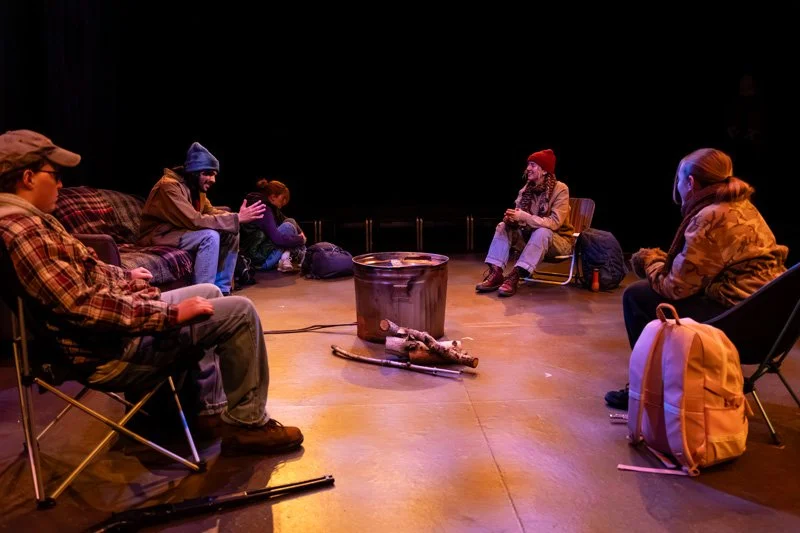
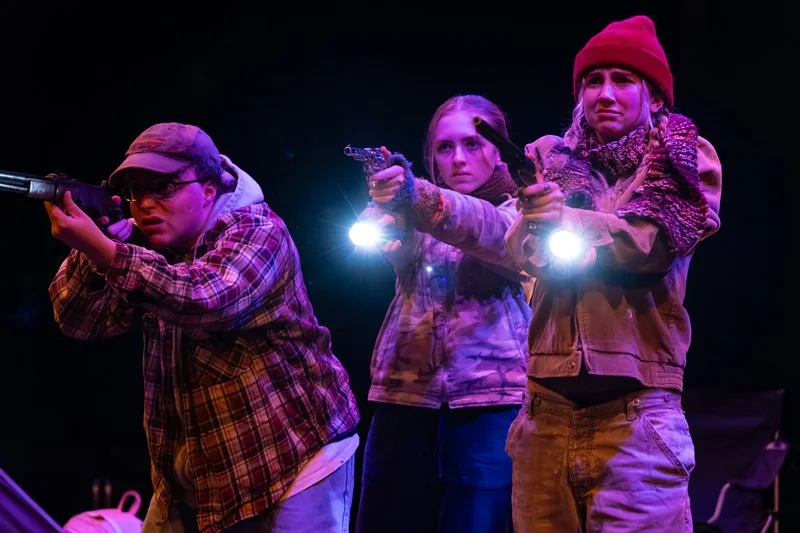
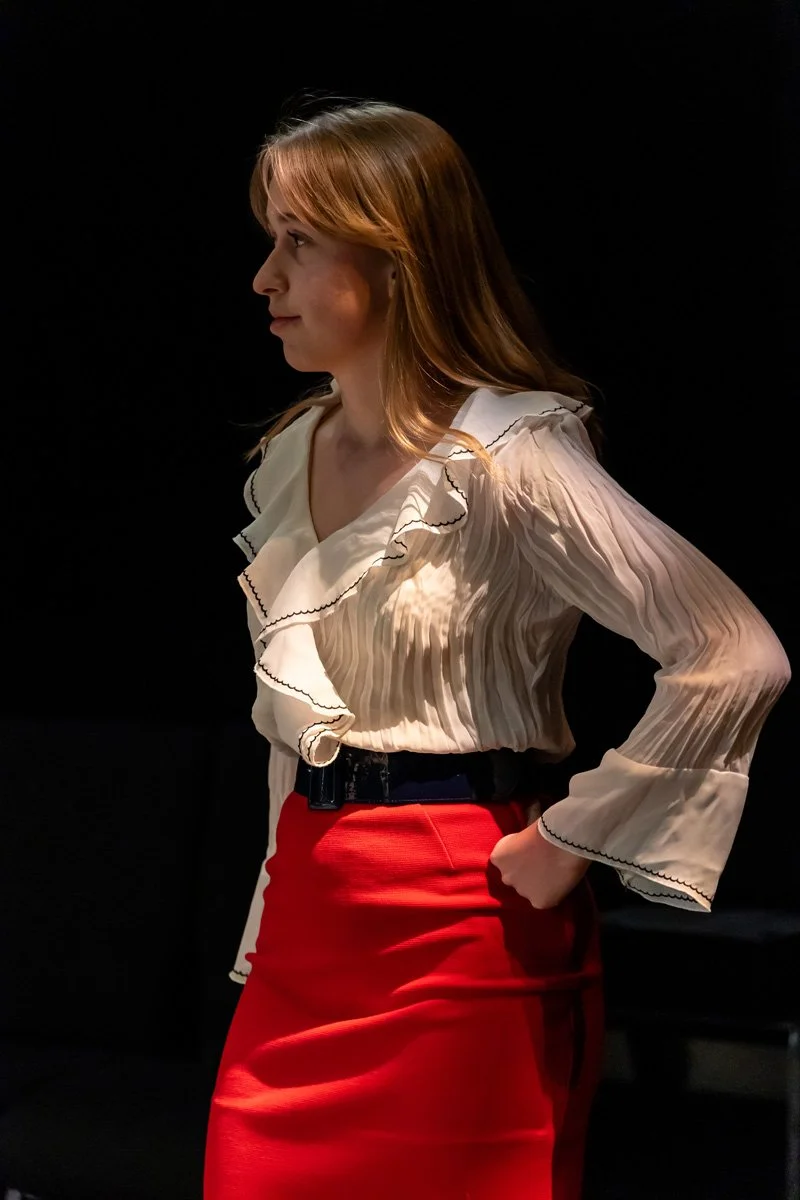
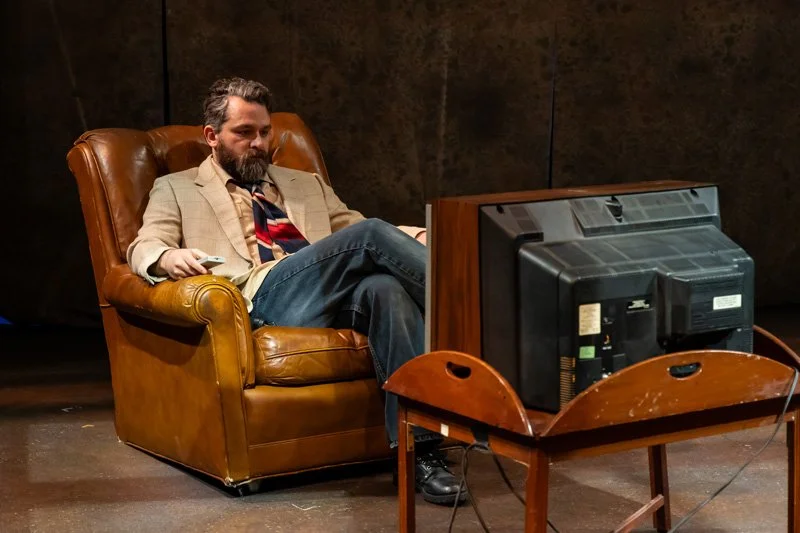
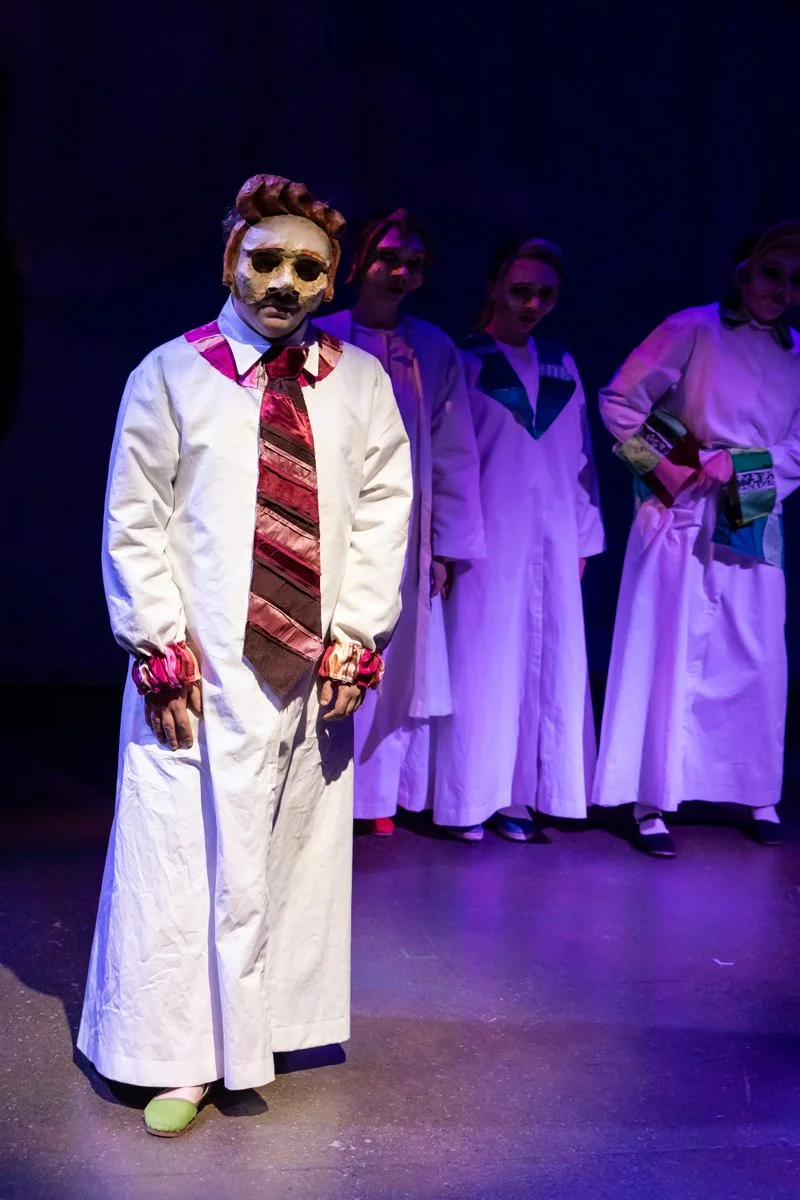
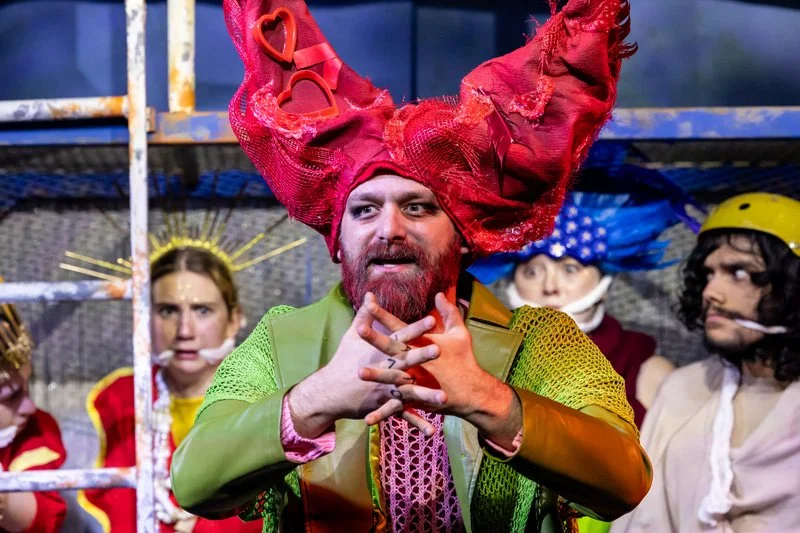
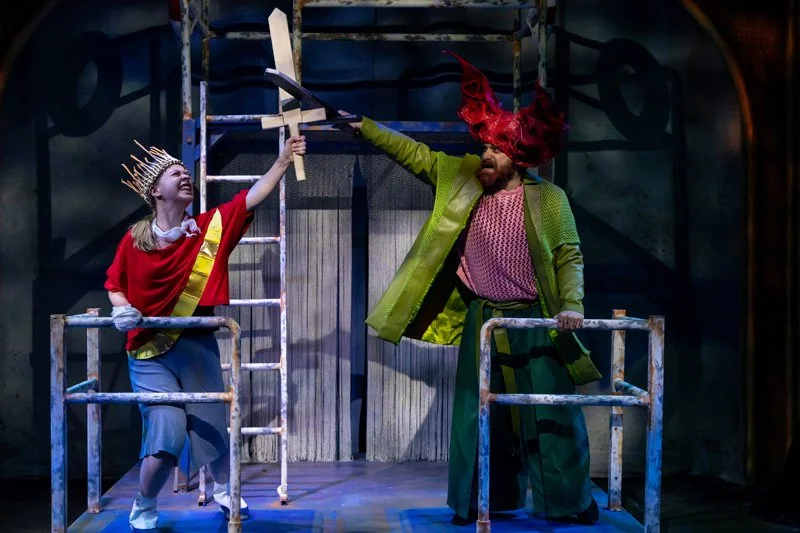
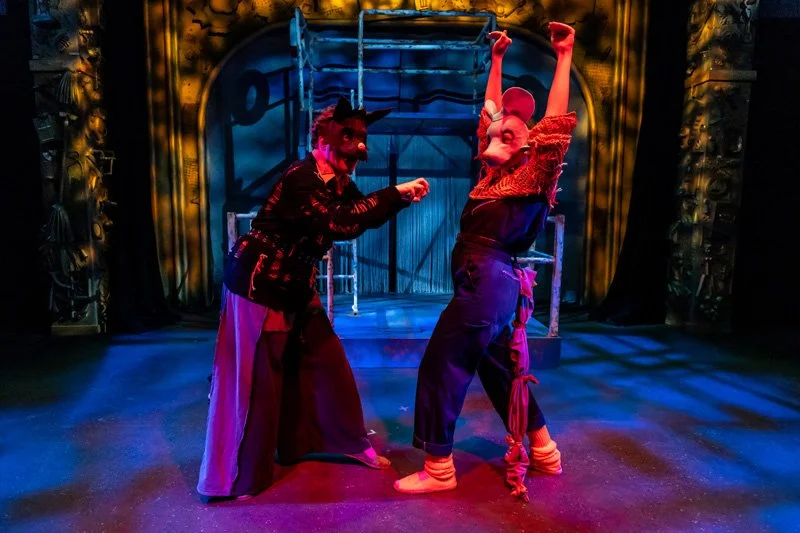
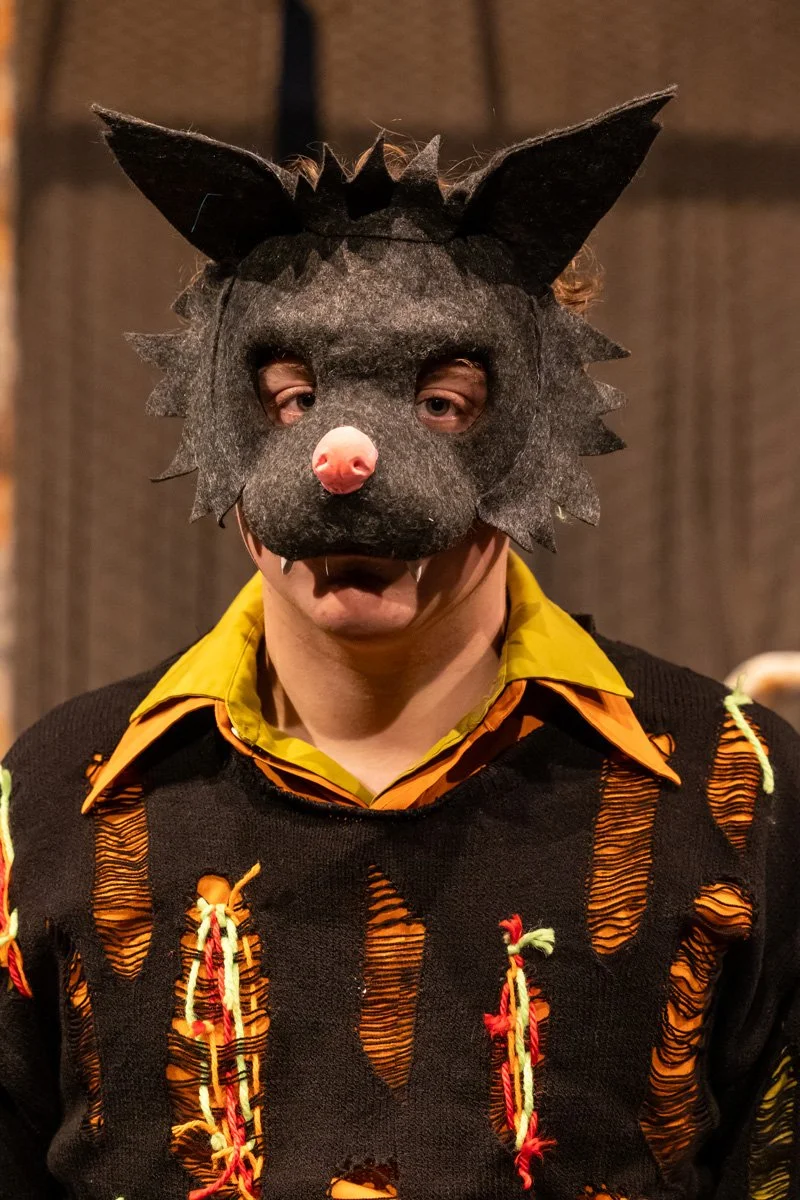
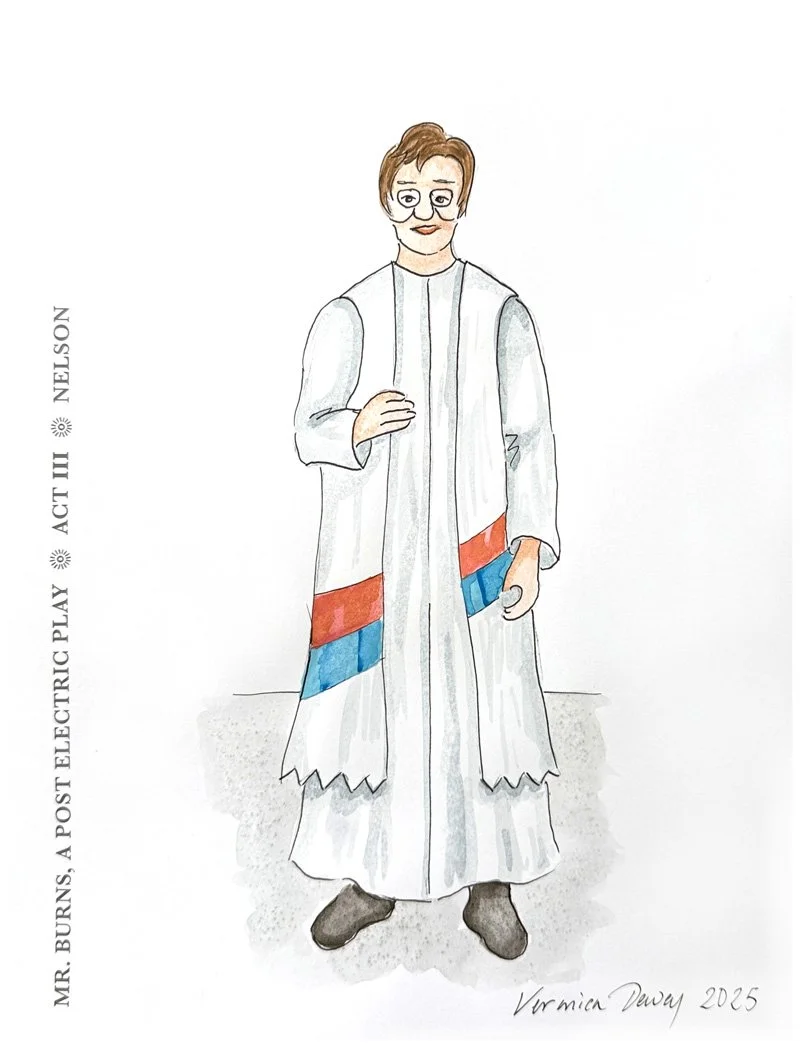
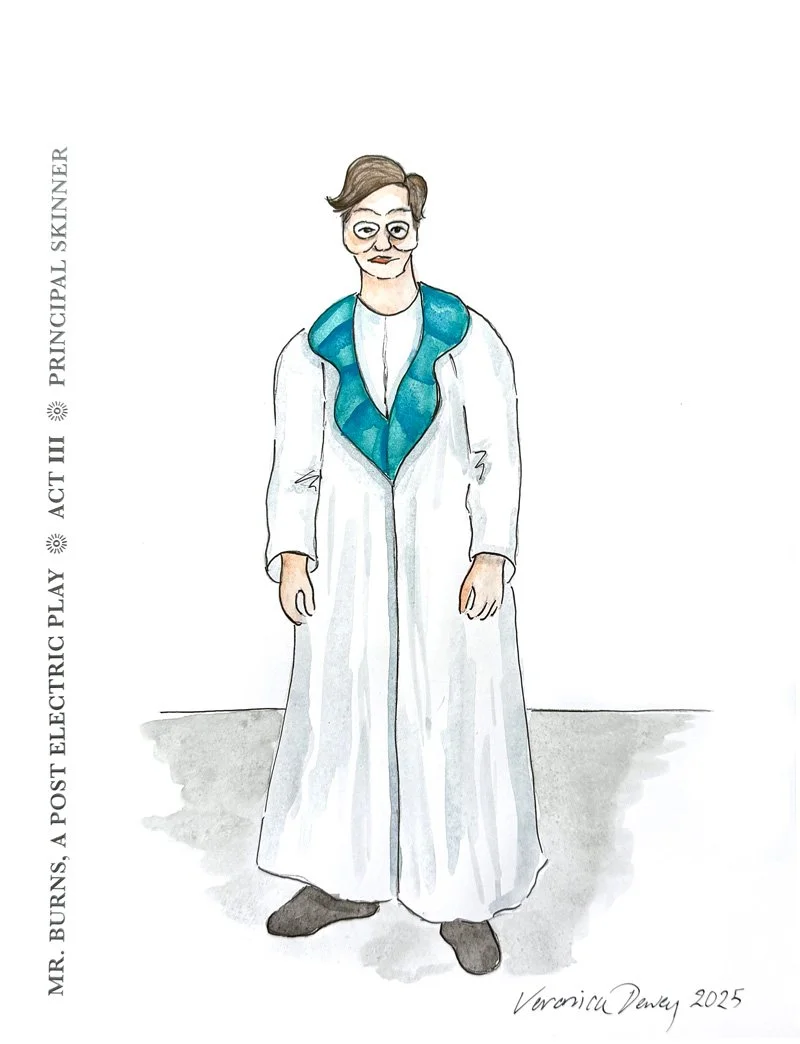
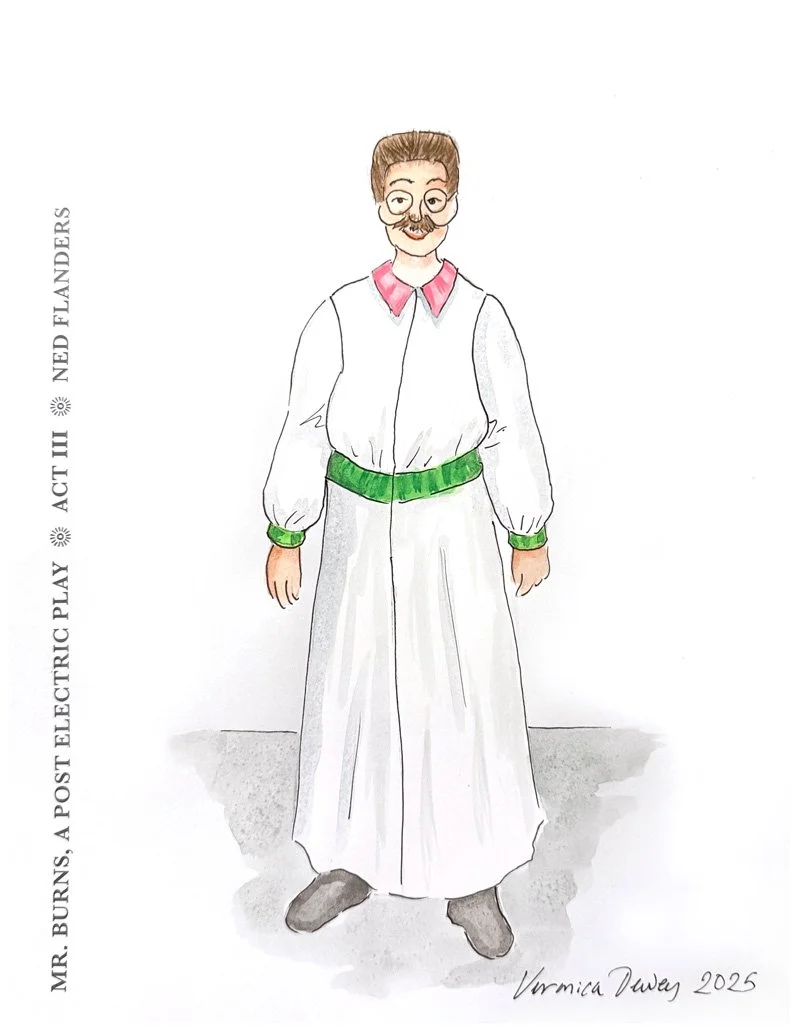
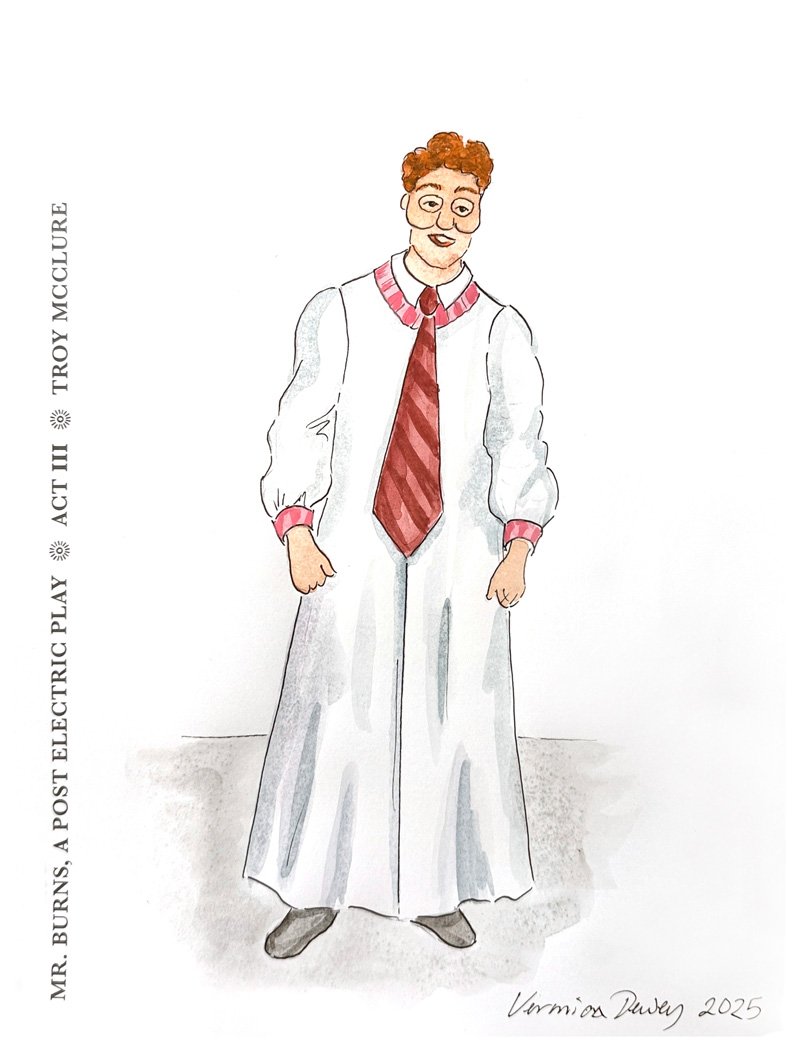
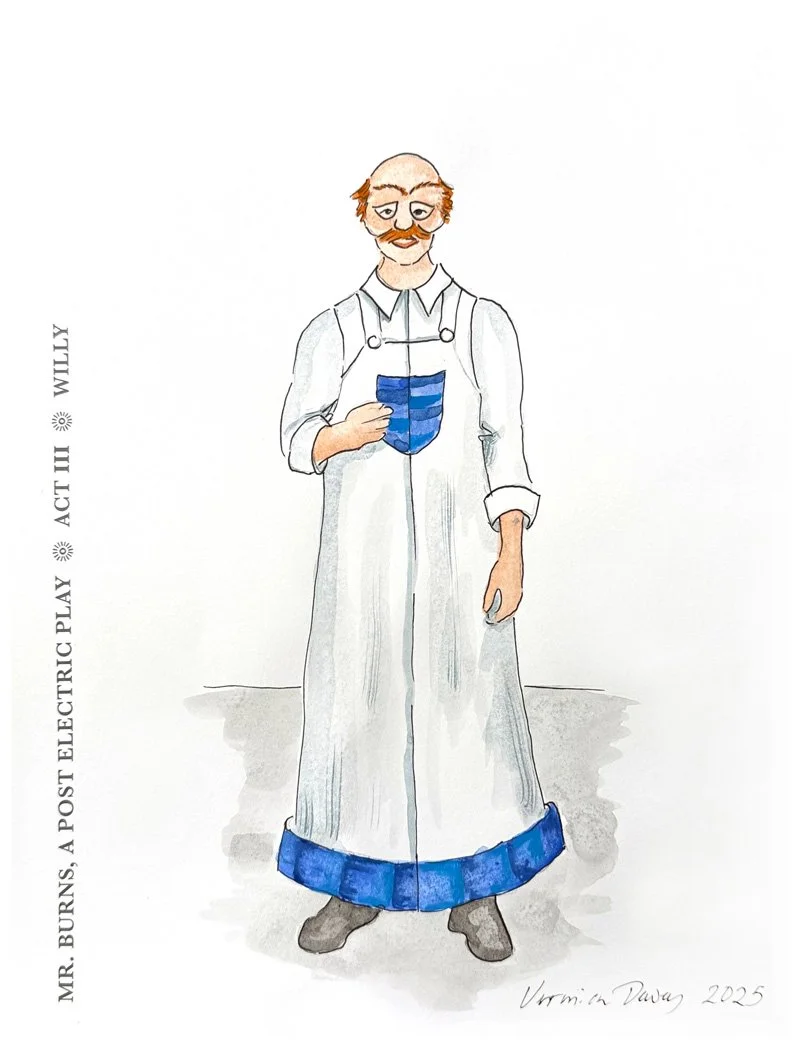
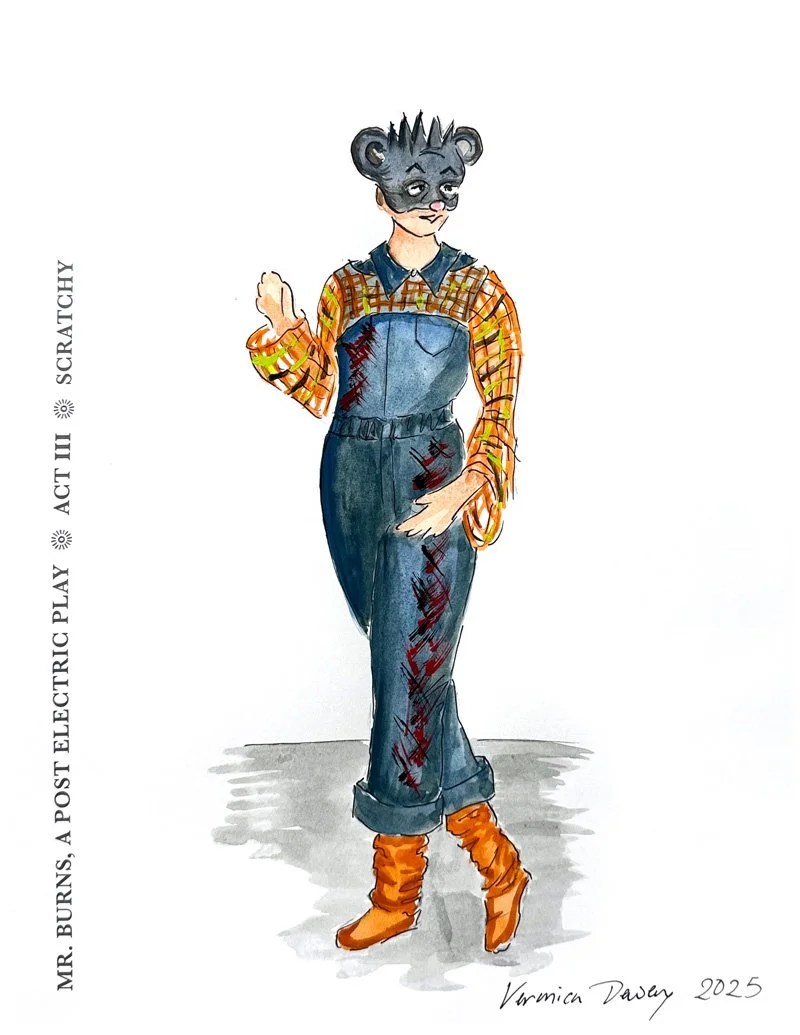
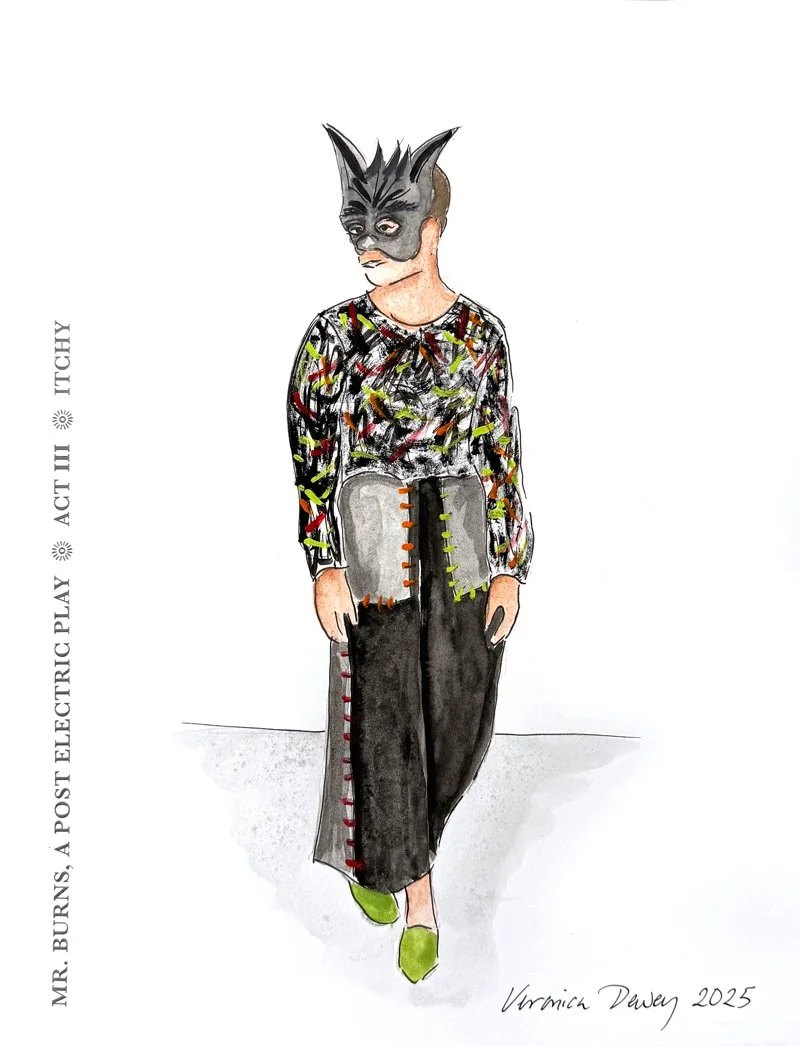
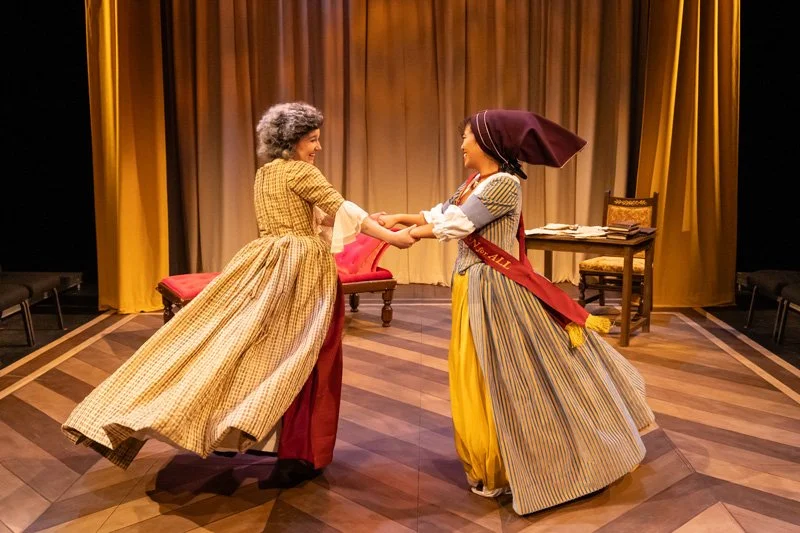
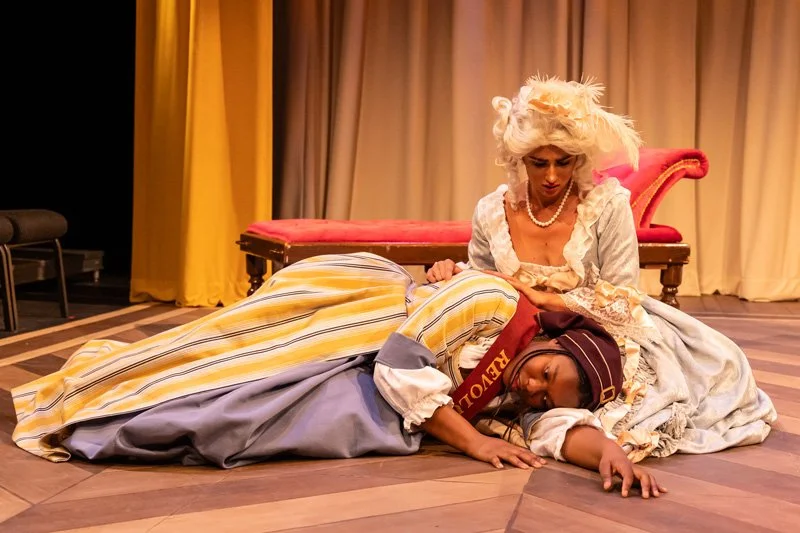
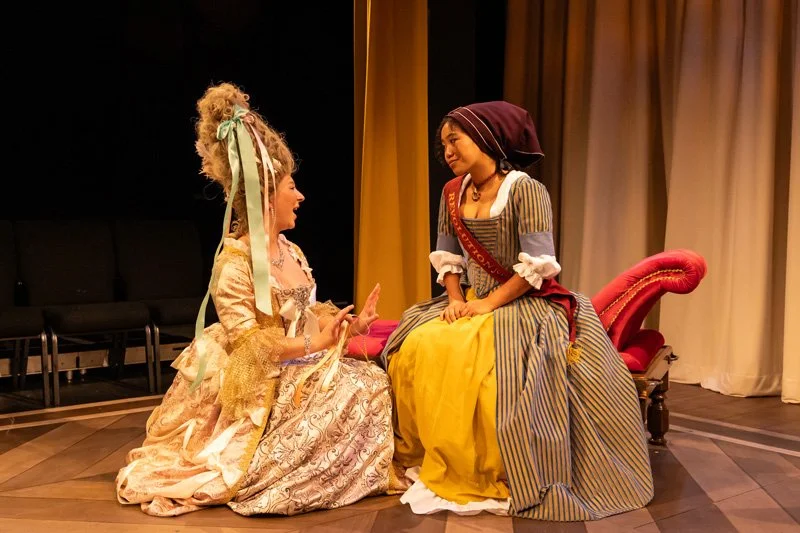
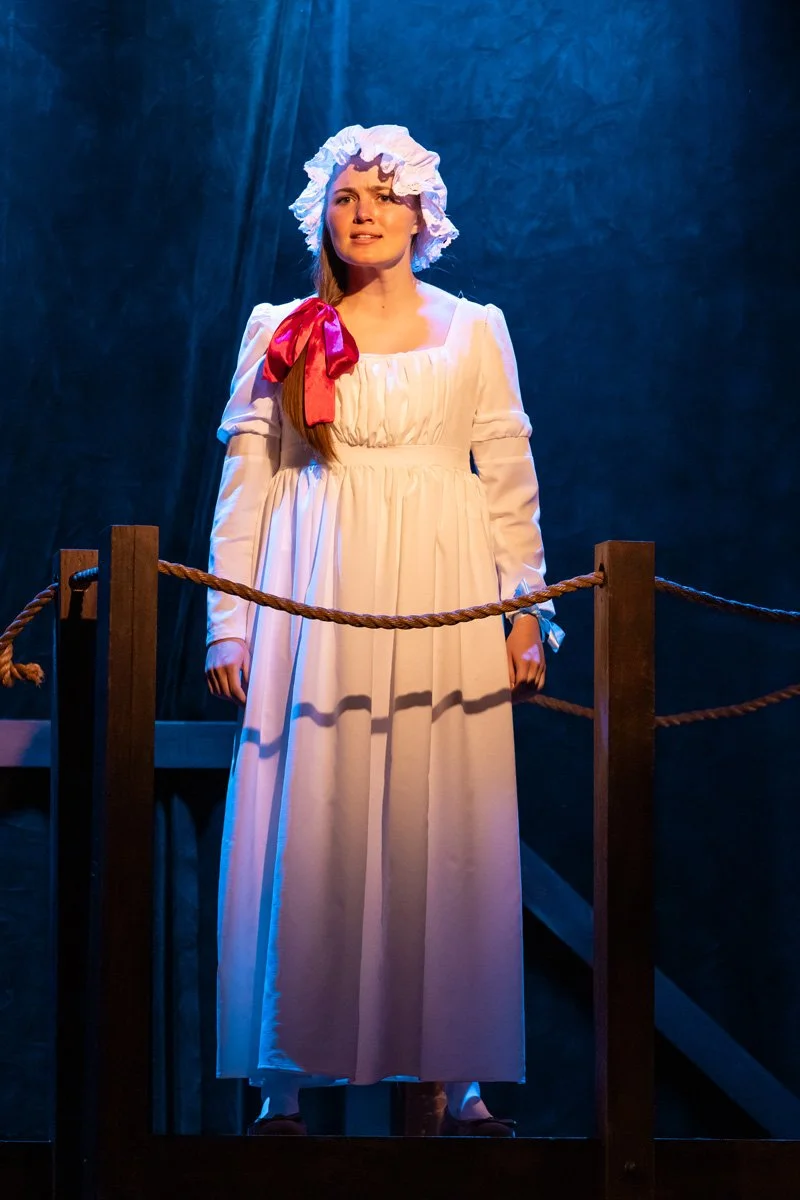
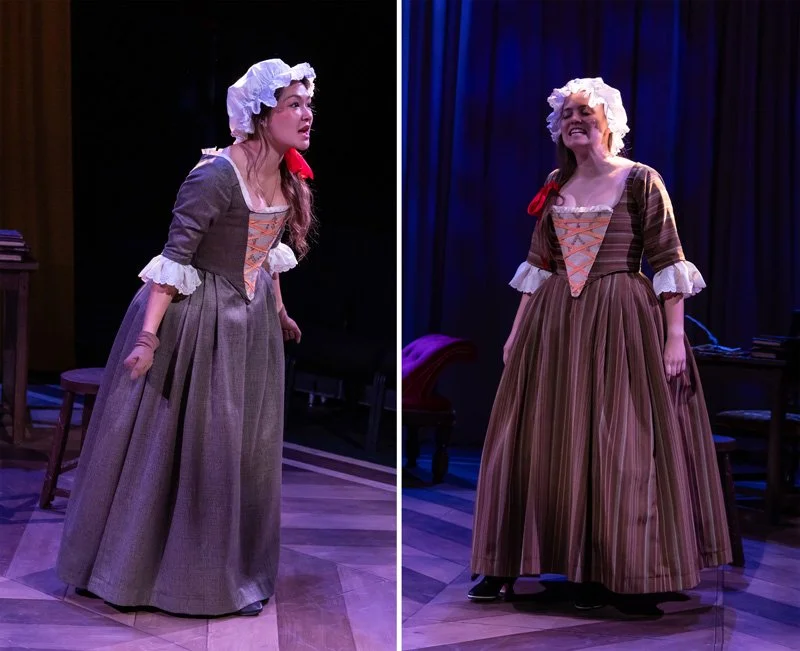
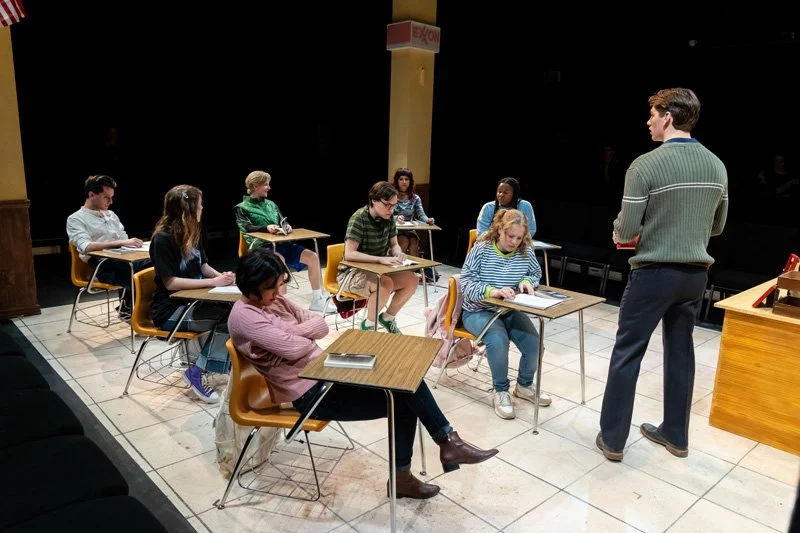
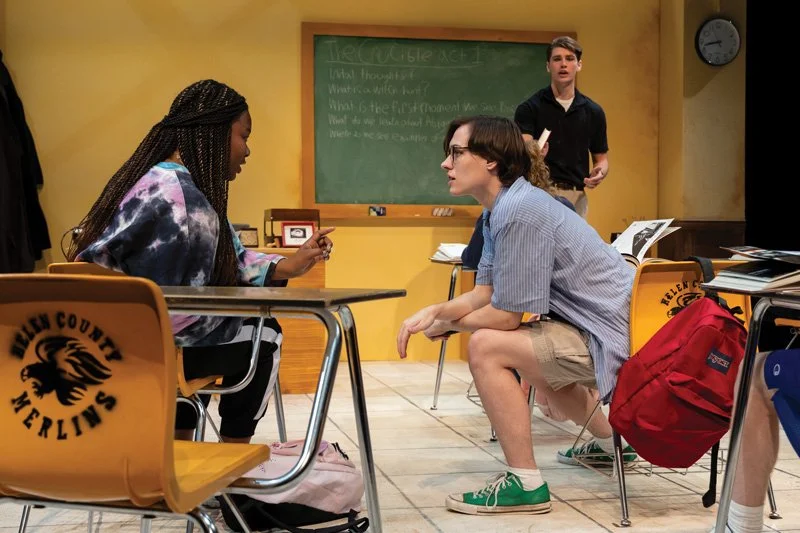
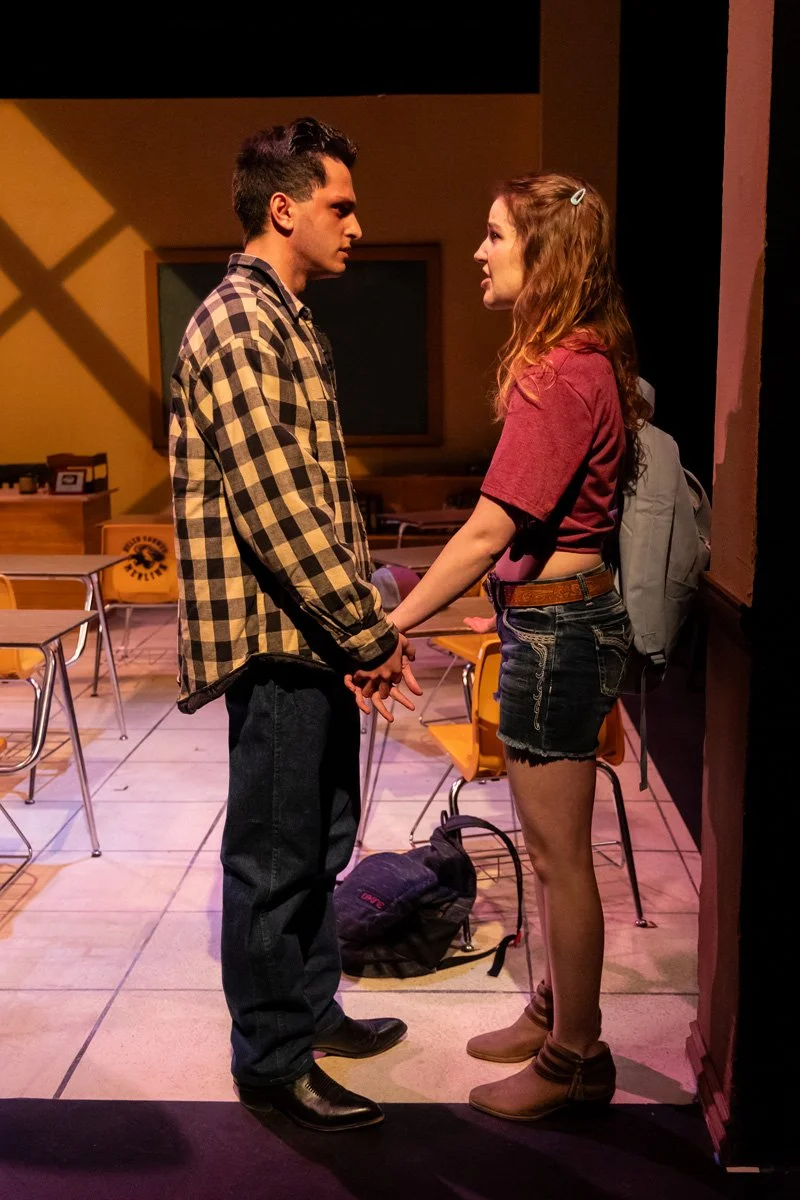
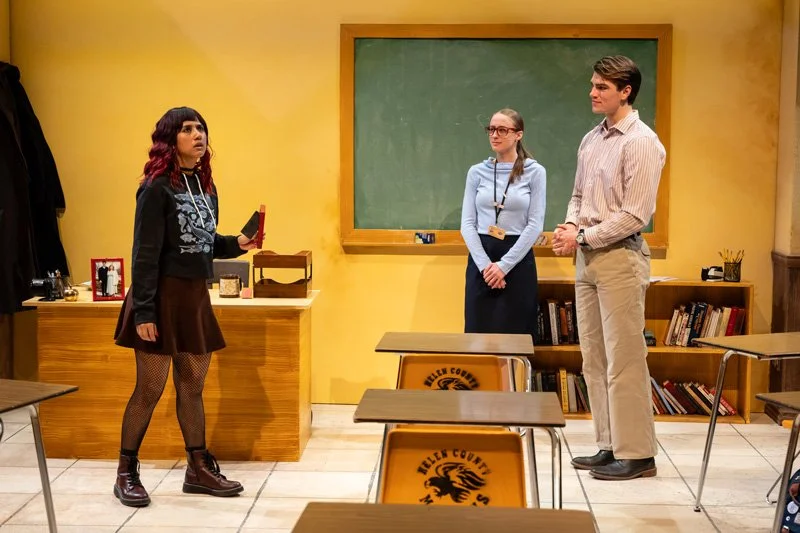
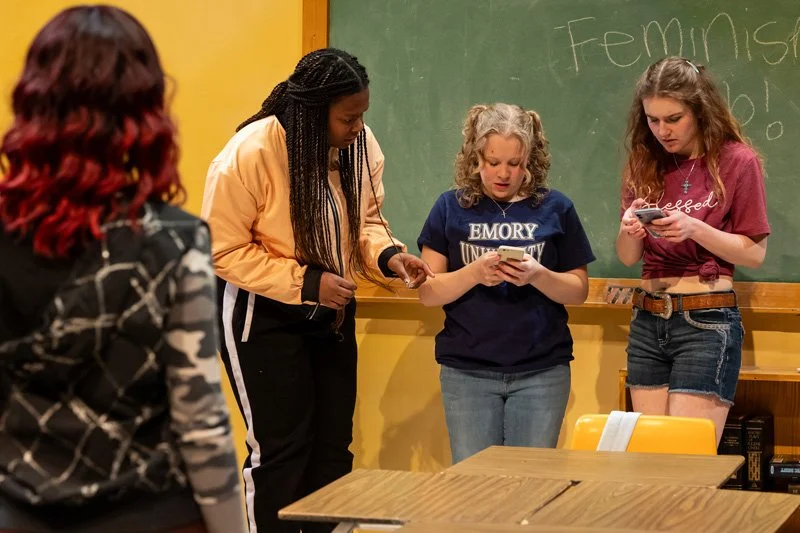
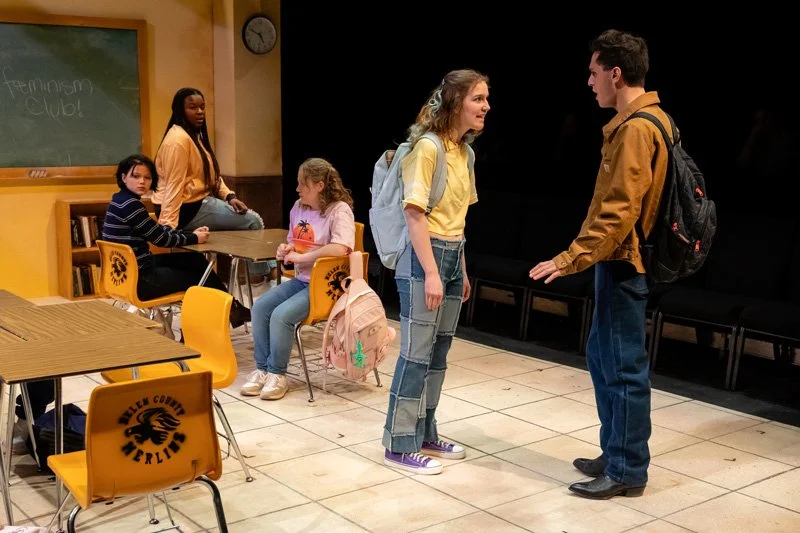
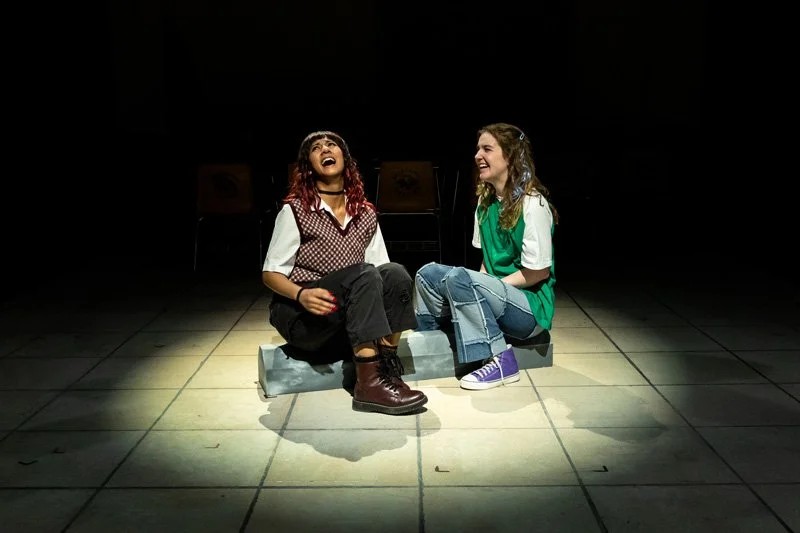
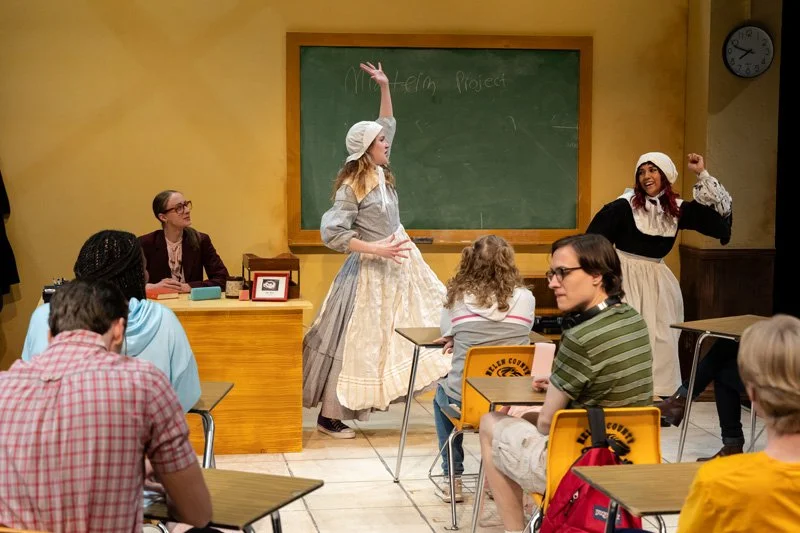
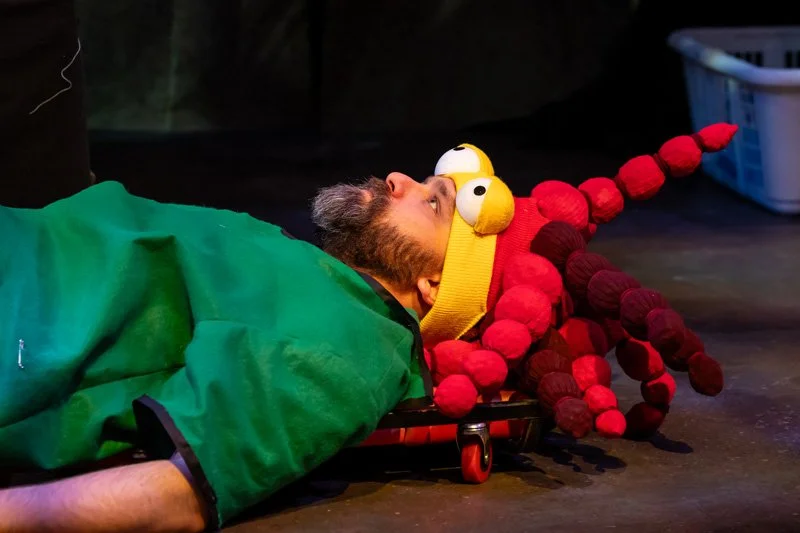
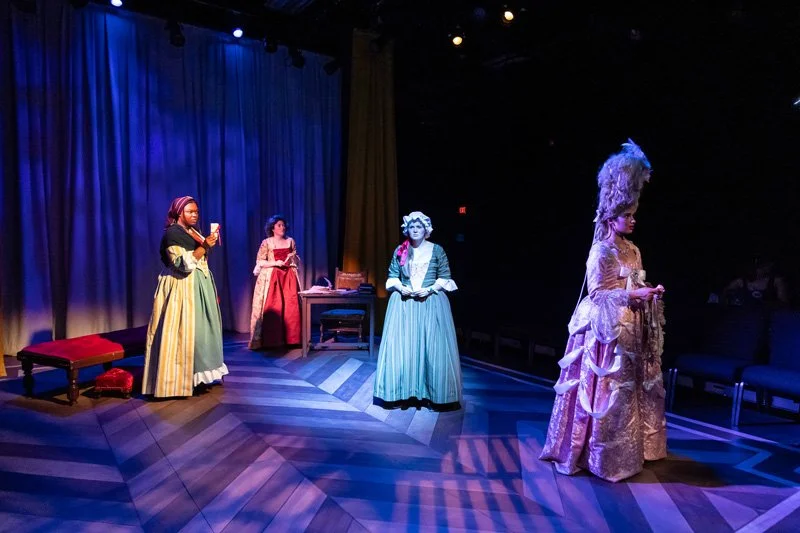
One of the most interesting challenges of designing Mr. Burns was imagining how clothing might evolve in a society rebuilding itself after an apocalypse. The play takes place across three time periods, spanning 75 years, and I wanted the costumes to reflect how people's relationships with clothing, materials, and cultural traditions might change over time.
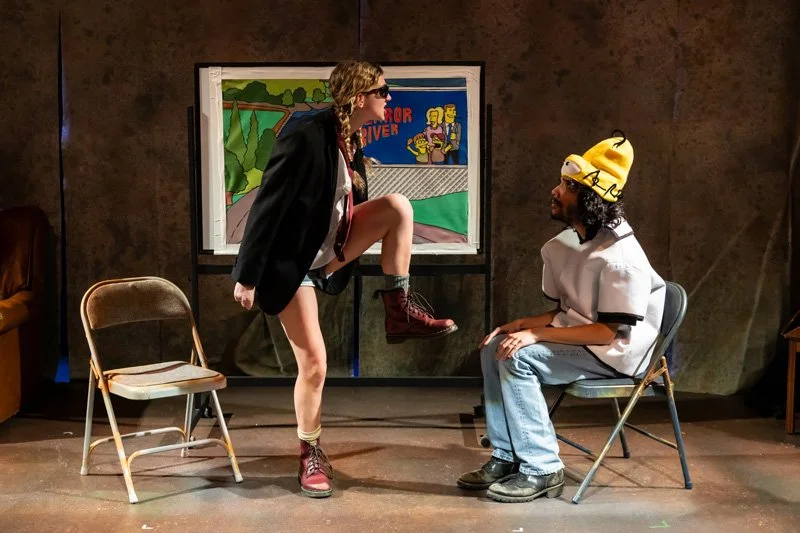
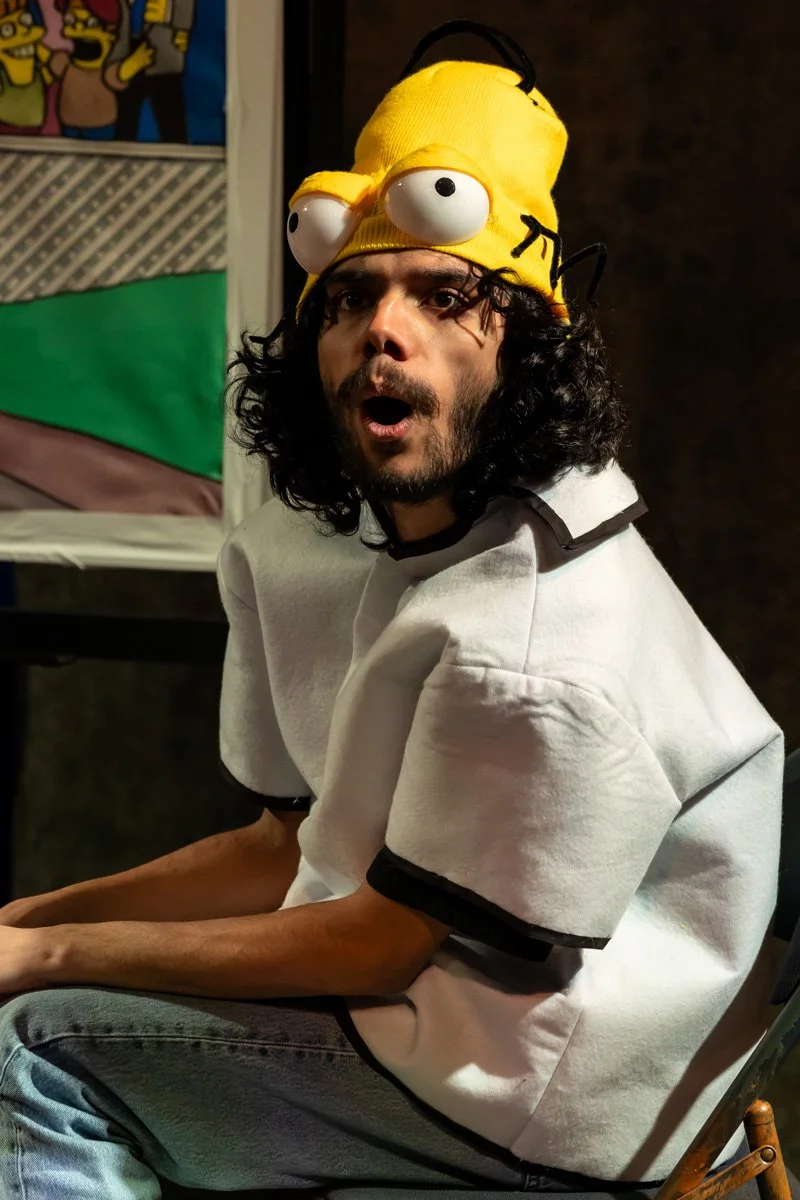
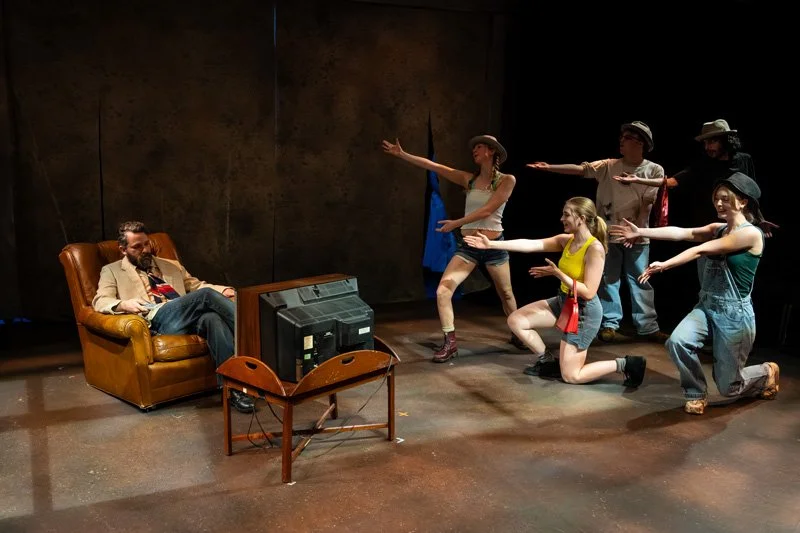
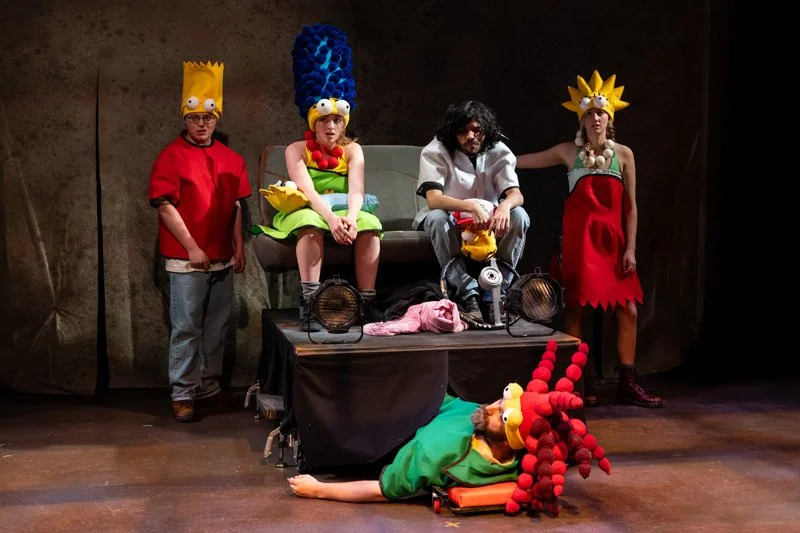
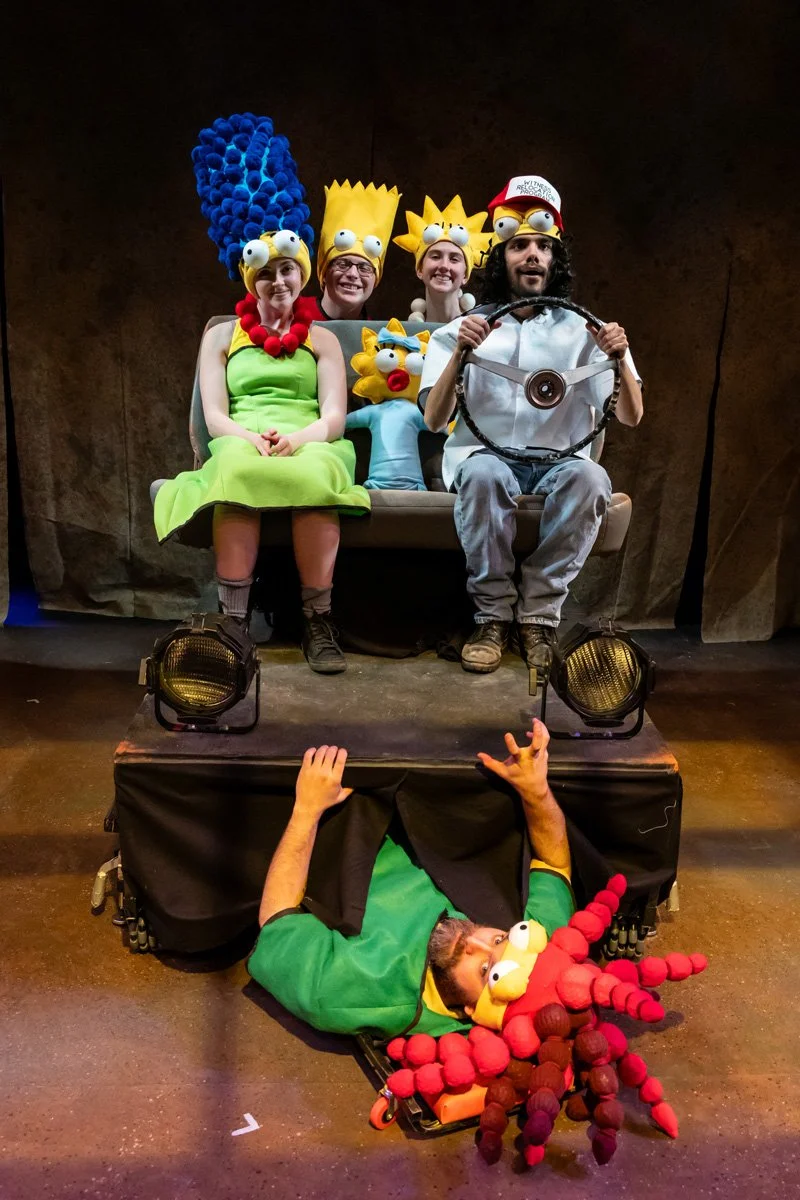
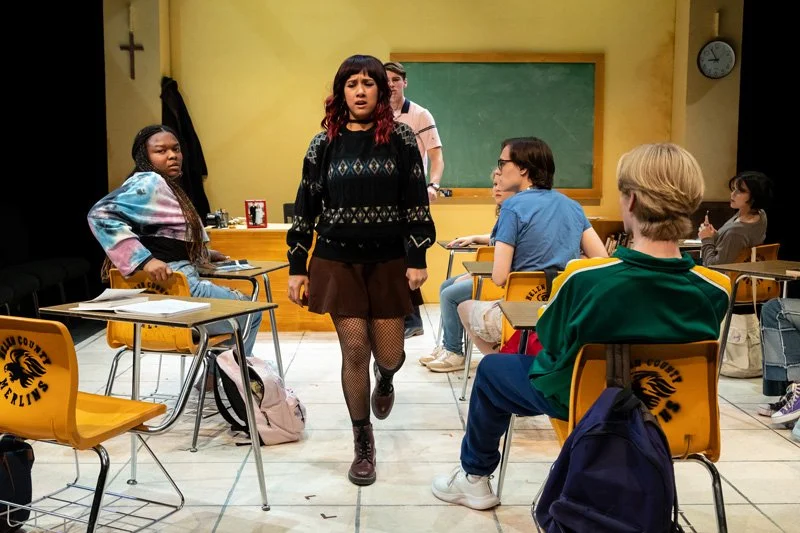
In Act II, seven years after the collapse of civilization, I imagined the survivors wearing familiar contemporary clothing, now worn and weathered from years of use. The materials for their Simpsons costumes, used for performance, would have been difficult to come by, but could have been begged, borrowed, or stolen.
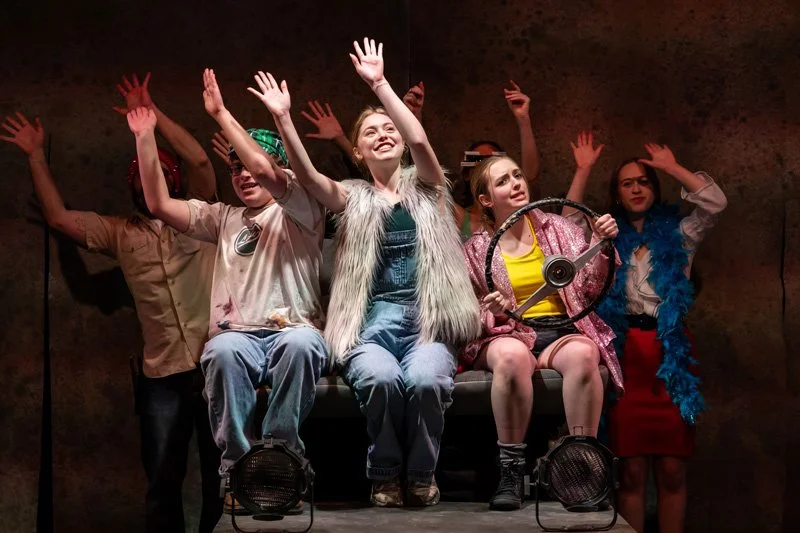
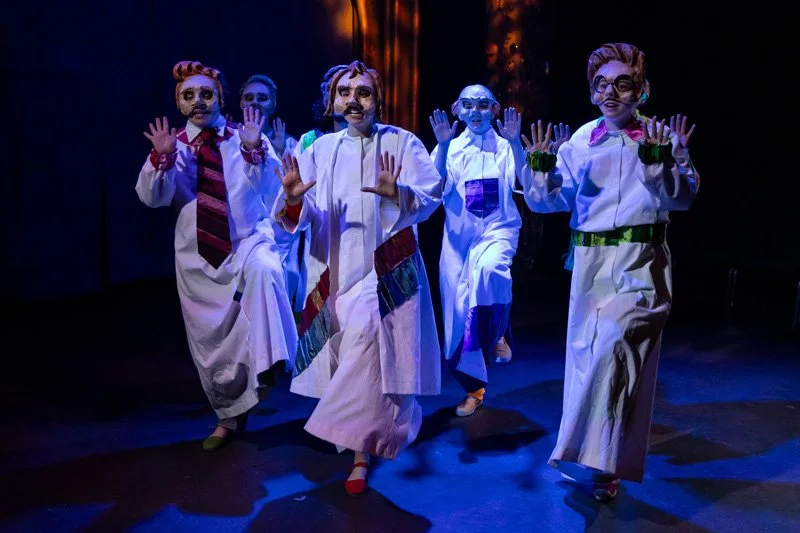
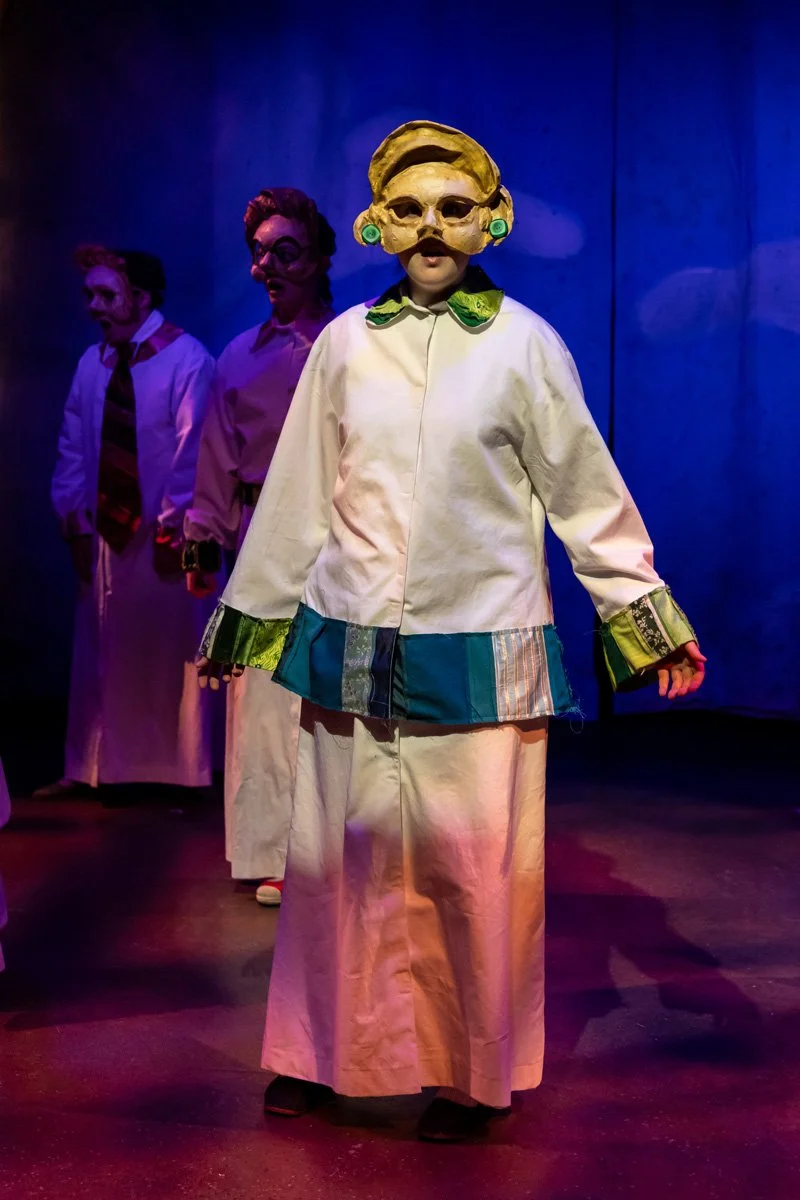
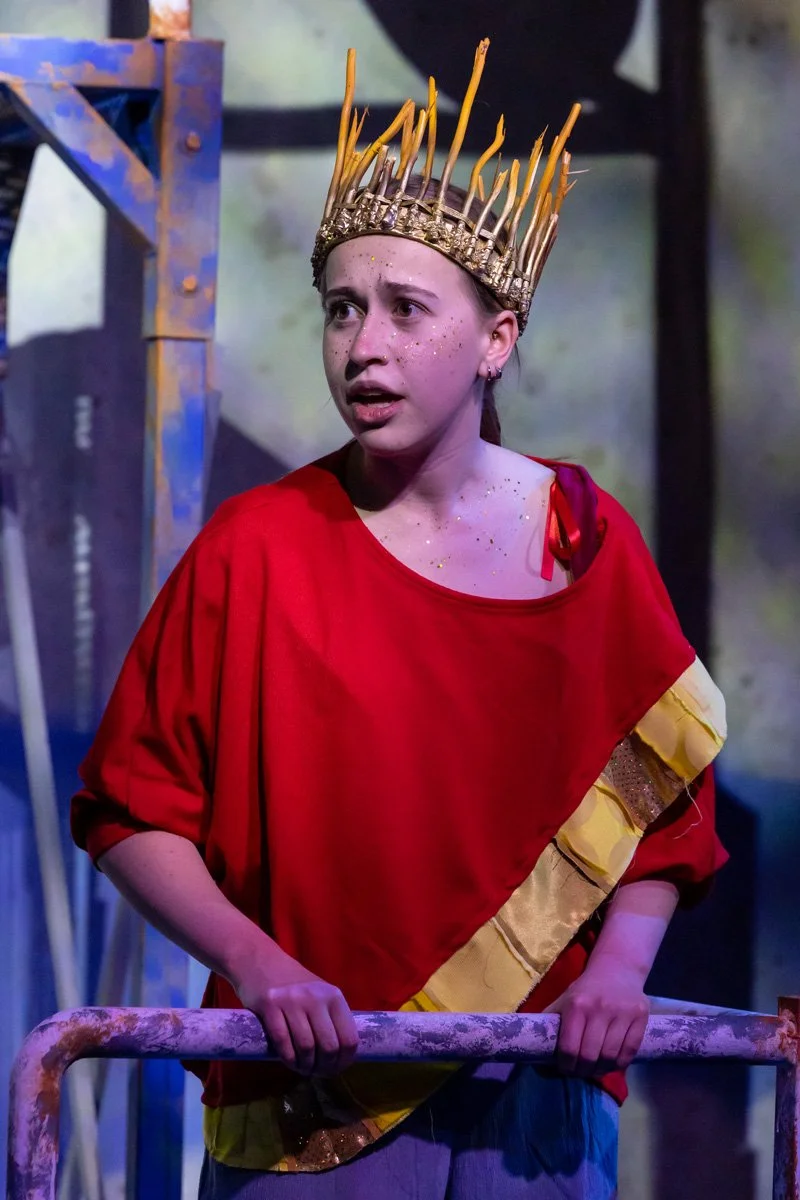
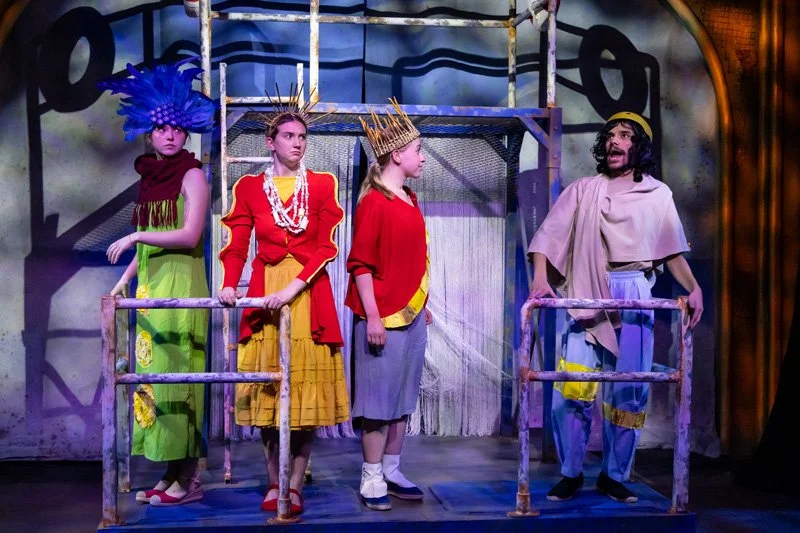
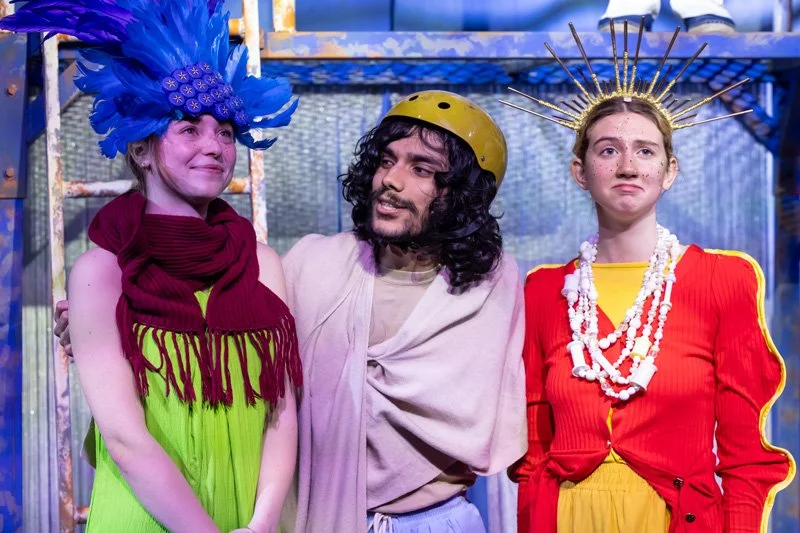
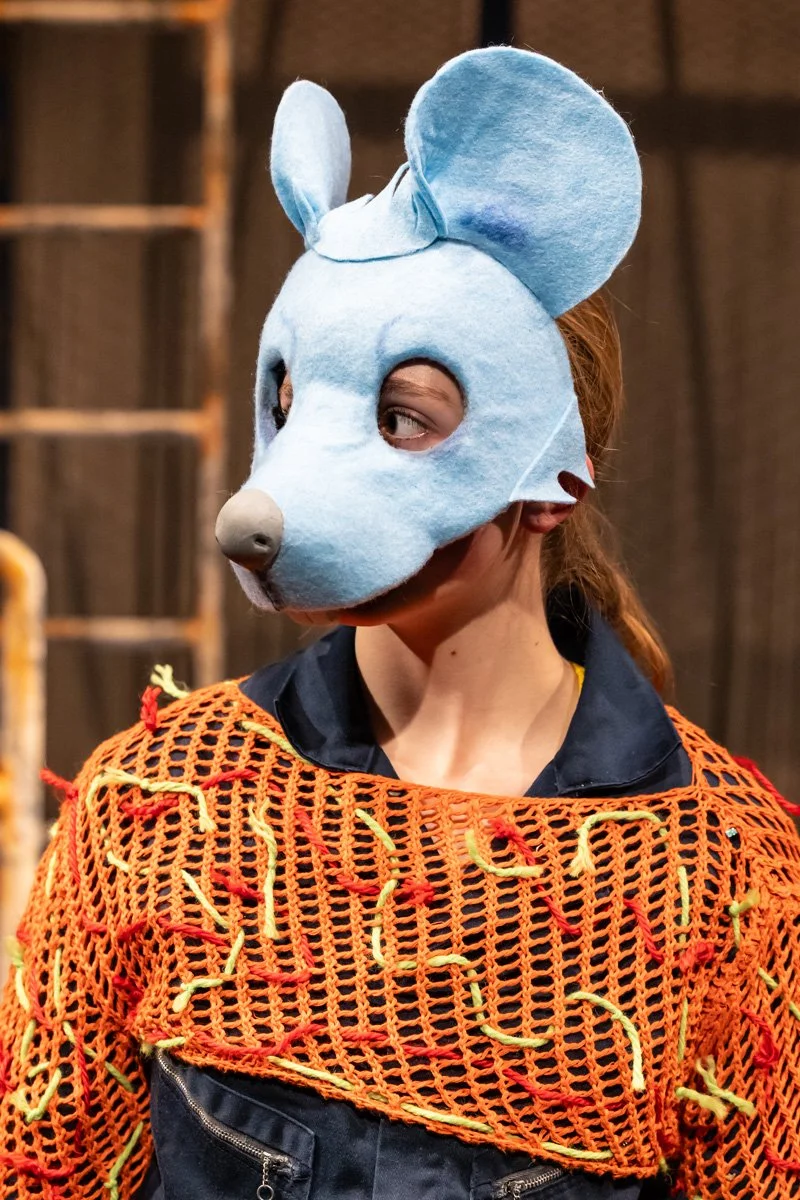
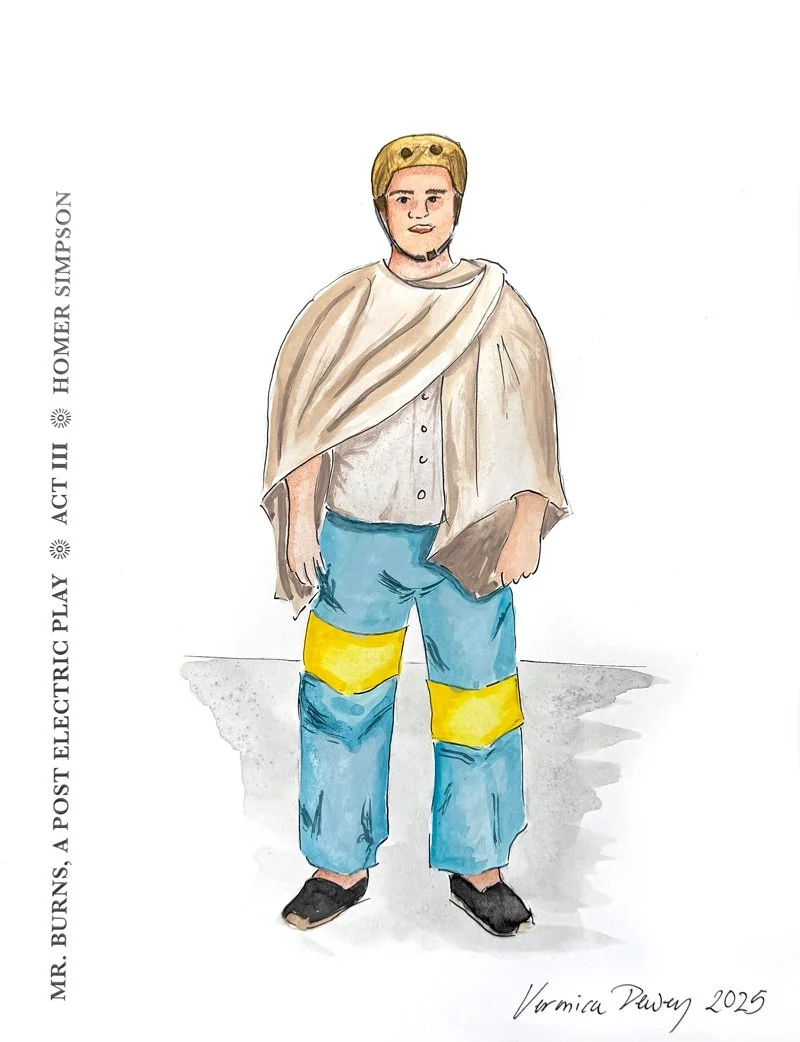
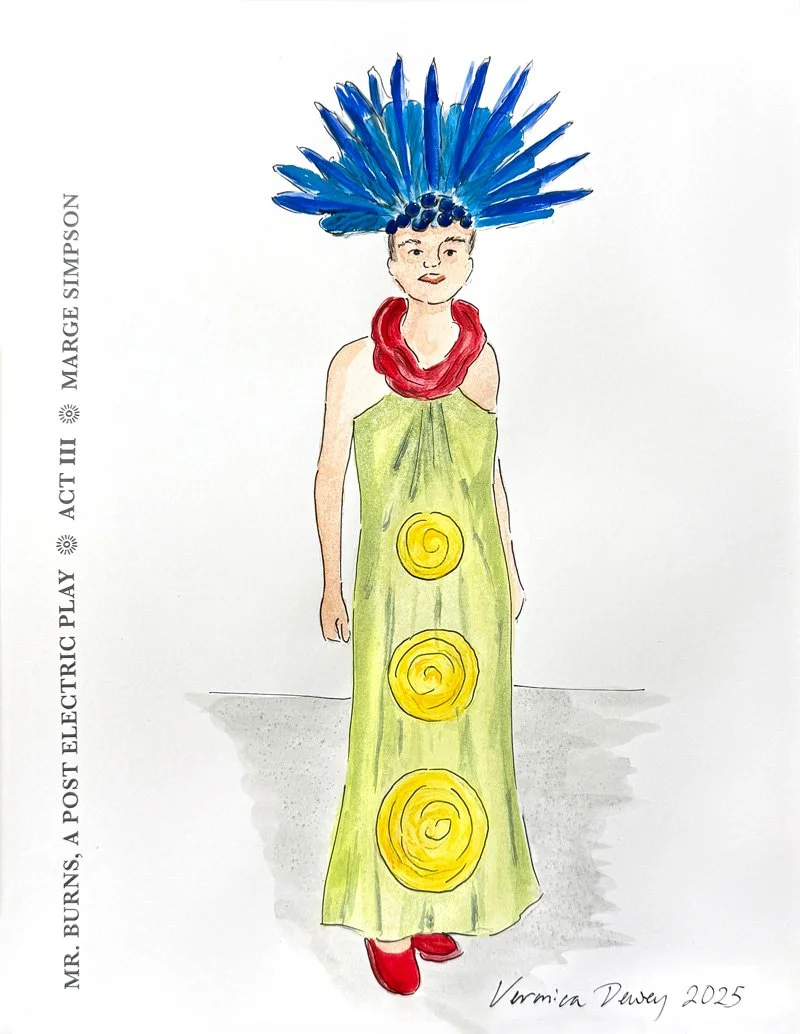
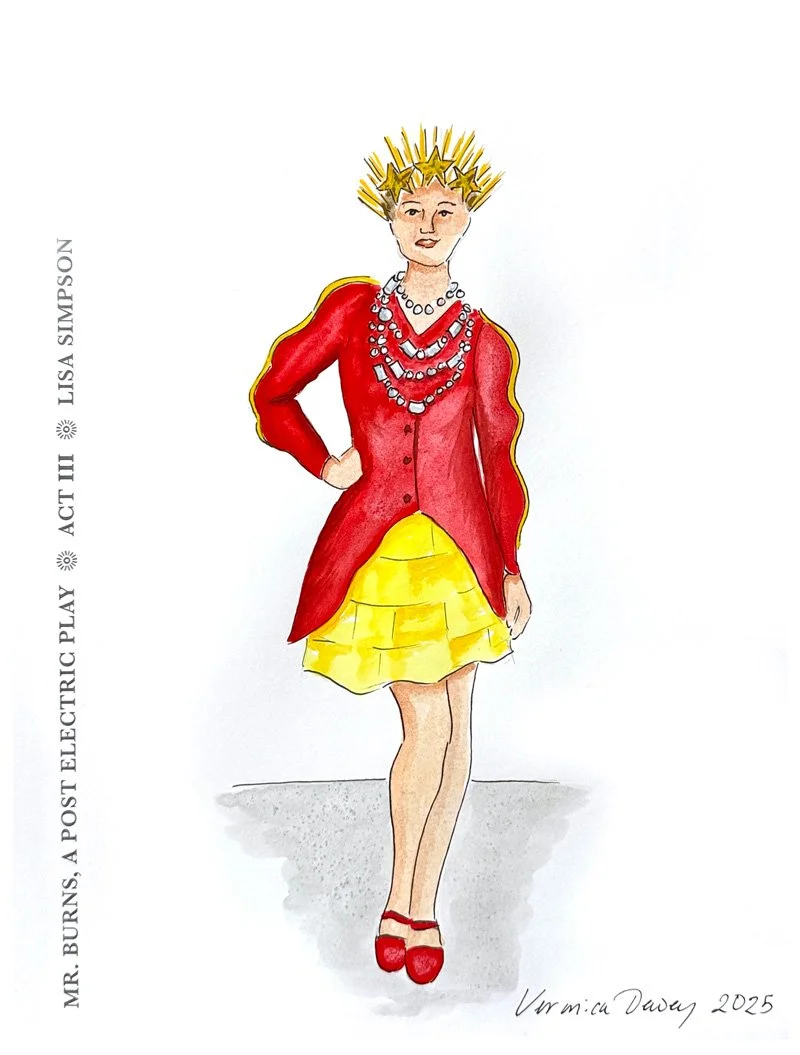
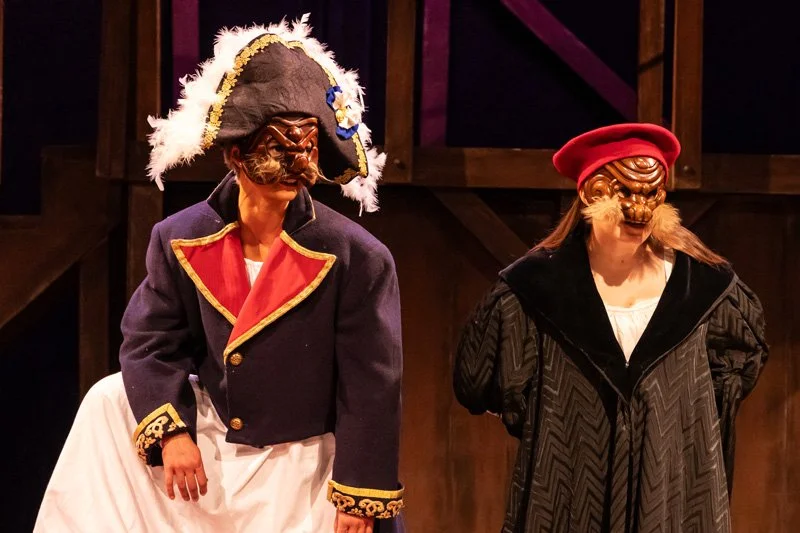
75 years later, in Act III, I envisioned a society that had rediscovered basic weaving and dyeing techniques. Newly made garments would be relatively simple, while scraps of fabric and objects surviving from before the apocalypse would be treasured and incorporated into ceremonial clothing. I wanted the Simpsons characters to remain recognizable while taking on the qualities of mythological figures. I incorporated found objects into their costumes as symbolic references to their original identities: an old helmet for Homer's round head, bottle caps to adorn Marge's headdress, sticks to represent Bart’s spiky hair, and paintbrushes for Lisa's crown. I loved exploring how ordinary objects might take on new meaning as familiar characters evolved into the legends of a new civilization.
Director: Sam Collier
Assistant Director: Kasra Mirfattahi
Assistant costume designers: Aria Gronberg, Sunny Lee
Mask artisans: Koral Jackson, Shannon Kosman, Saysha Dewey
First hand: Sasha Solovyev
Scenic Design: Jonathan Spencer
Lighting Design: Evan Hunter
Photos: RDGPhoto